


Views: 0 Author: Site Editor Publish Time: 2026-05-26 Origin: Site


Facility operators, coaches, and competitive players often view indoor sports technology suspiciously. Can a digital system truly replicate the heavy topspin of a baseline rally? Does it accurately measure the raw velocity of a flat serve? It is entirely natural to question virtual environments. Physical reality feels hard to digitize.
Indoor training facilities and commercial entertainment venues increasingly adopt virtual solutions today. Because of this trend, understanding the baseline accuracy of a Tennis Simulator transitions from a mere technical curiosity into a critical performance evaluation. Choosing the right tracking hardware ultimately dictates your venue's success.
High-end digital systems do accurately track ball speed. They also estimate spin reliably. However, their precision relies entirely on the underlying tracking technology, complex aerodynamic algorithms, and strict environmental controls. Read on to discover how optical sensors capture flight data. You will also learn why room environment matters and how to evaluate systems properly.
Technological Validity: Academic studies validate that advanced multi-camera systems can achieve >99% accuracy in determining the spin axis and highly reliable RPM calculations for tennis.
The "Accuracy" Formula: True simulation accuracy is a combination of direct measurement (ball speed, launch angle) and algorithmic modeling (drag, lift, and surface friction).
Implementation Matters: The most common causes of tracking failure are not software limitations, but environmental variables—specifically improper lighting, uncalibrated hardware, and degraded tennis balls.
Commercial vs. Pro Use: Buyers must align the simulator's hardware specifications (frame rate, sensor range) with their primary use case, whether that is high-volume commercial entertainment or precision-driven professional coaching.
Evaluating virtual sports environments requires understanding the hardware engine. The hardware engine drives the data output. Buyers must choose systems based on tracking methodology. This choice dictates both reliability and overall performance. We can categorize tracking methods into three main groups.
High-Speed Camera-Based (Photometric) Systems
Photometric systems utilize machine learning alongside high-frame-rate cameras. Pro tour matches use similar Hawk-Eye technology. These cameras capture micro-movements of the seams and fuzz. They directly measure velocity, horizontal launch angles, and vertical launch angles. They also detect the initial spin axis. The primary advantage is exceptional accuracy indoors. Indoor spaces often restrict flight distance severely. Cameras process data within milliseconds of impact.
Radar-Based Systems
These systems rely on Doppler radar tracking. Radar requires a longer flight path. It needs physical space to observe the ball's behavior. Radar uses this sustained observation to calculate spin decay. This limitation makes radar less practical for compact indoor enclosures. The tracking window indoors is often too short.
Hybrid Measurement Systems
Hybrid options combine optical cameras and radar tracking. Cameras grab immediate impact data. This includes the crucial spin axis and launch angle. Radar then validates ongoing flight and speed. They offer excellent data redundancy. However, they demand highly precise room calibration.
Breaking down physical metrics prevents exaggerated expectations. We must understand exactly how physical actions translate into digital environments. Systems combine direct physical measurement and algorithmic estimation.
Hardware measures these metrics precisely at the moment of impact. The system calculates the time a ball takes to cross a standardized physical space. High-speed sensors log the exact vector. You get instant, indisputable speed metrics. Direct measurement provides the foundational layer of digital accuracy.
Human limits cap topspin outputs strictly. ATP pros typically generate roughly 4,000 to 5,000 RPM. Simulators capture consecutive frames of the ball immediately after contact. They use contrast points like printed logos and fuzzy seams to measure rotation. Academic biomechanics research confirms interesting findings. Optical systems may have lower absolute sampling rates than raw radar. However, their aerodynamic models produce highly reliable spin estimations. These models factor drag and lift coefficients effectively. They calculate the Magnus effect to simulate dipping trajectories. They easily support rigorous technique analysis.
A credible simulator must account for varied court surfaces. A ball spinning at high RPMs reacts differently across surfaces. Hitting virtual clay feels fundamentally different from hitting virtual grass. Advanced software engines factor in a "coefficient of restitution." This simulates energy loss upon the virtual bounce. The friction coefficient determines the post-bounce speed. It also determines the post-bounce trajectory.
Data Metric | Measurement Method | Primary Driver of Accuracy |
|---|---|---|
Ball Speed | Direct Measurement | Camera frame rate and exact timing across space. |
Launch Angle | Direct Measurement | Sensor calibration and vertical/horizontal lens positioning. |
Spin Rate (RPM) | Calculated Estimation | Visual contrast of ball seams and aerodynamic lift models. |
Post-Bounce Trajectory | Algorithmic Modeling | Coefficient of restitution and virtual surface friction. |
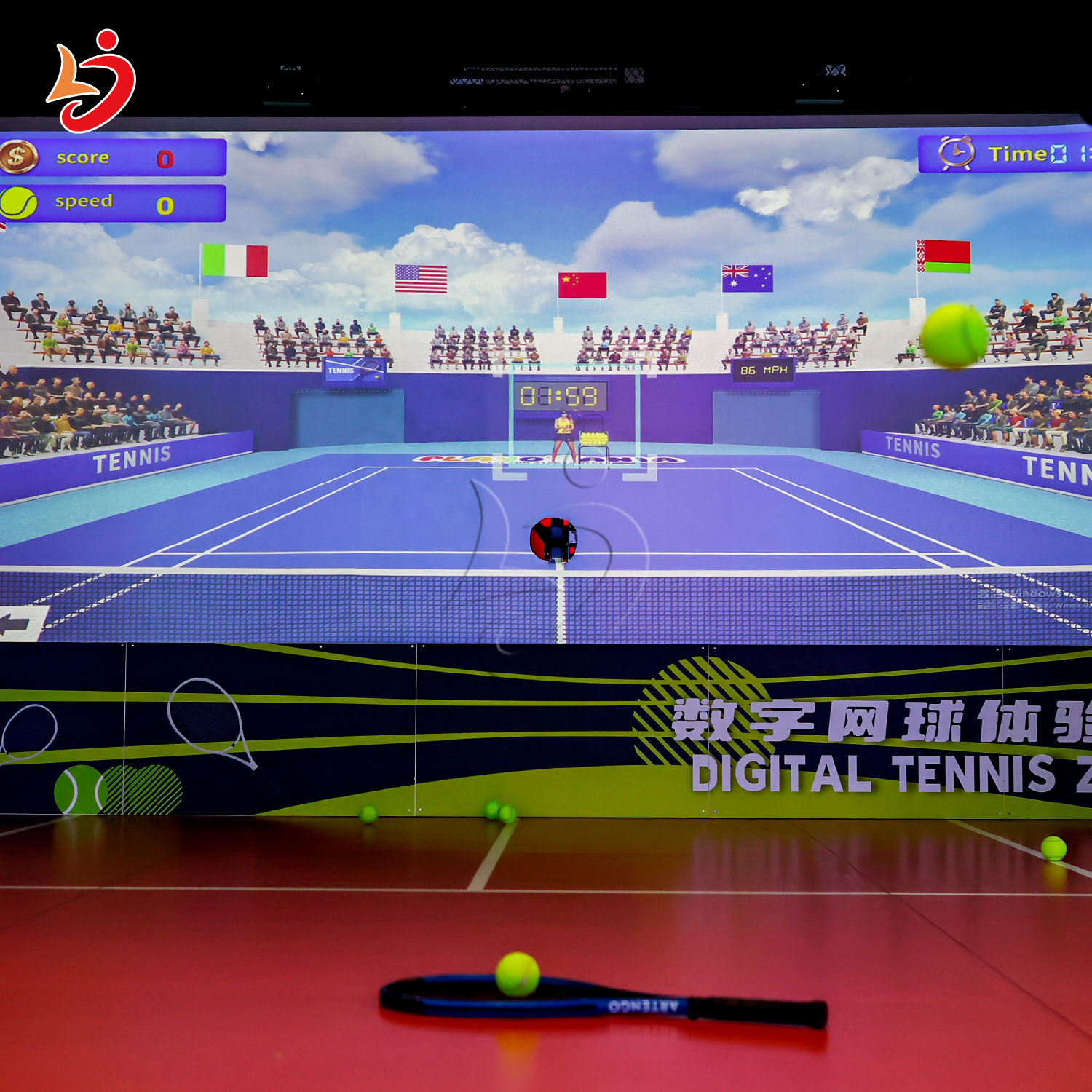
Map technical features directly to user outcomes. This mapping helps buyers build functional requirements checklists. Your specific venue type dictates your necessary hardware features.
Coaches require highly detailed performance analytics. They need ball speed, RPMs, launch angle, and shot depth. They also need instant HD video replay. Technique breakdown is mandatory for professional improvement. Analyzing the racquet face angle at impact helps players improve rapidly. You must prioritize absolute metric fidelity over game modes. Accuracy empowers data-driven instruction.
Family Entertainment Centers prioritize AI rally capabilities. Users enjoy continuous virtual play. They dislike manual ball feeding. Commercial venues value broad sensing ranges. These sensors track player footwork and bodily movement. They track more than just the ball. Venues require engaging gamification features over raw biomechanical data. Target challenges and scoring systems keep casual players fully engaged. Immersive graphics matter greatly here.
Assess your hardware footprint carefully before purchasing. Top-tier systems deliver high-volume ball striking in tiny spaces. Players can hit up to 300 balls per 20 minutes. You achieve this volume in a fraction of the square footage of a traditional court. Space efficiency maximizes your venue layout. You can fit multiple bays into a standard retail space.
Demonstrating industry experience means outlining hidden operational risks. Vendors rarely highlight these risks in glossy product brochures. Tracking sometimes fails. The causes are usually environmental, not software-based.
Common failure points include:
Environmental Lighting: High-speed cameras require distinct visual contrast to calculate spin. Poor, flickering, or uneven indoor lighting leads to dropped frames. The system then "guesses" RPMs. Proper illumination is non-negotiable.
Equipment Quality: Simulators track specific visual markers. Worn-out, uniformly fuzzy "dead" tennis balls lack visual contrast. Systems cannot detect the spin axis accurately without this contrast. Fresh balls ensure pristine data capture.
Hardware Calibration: Sensors bumped during operation skew baselines severely. Improperly mounted cameras during installation also ruin tracking. Flat drives might register as lobs. They might also dive straight into the virtual net.
The "Indoor Swing" Phenomenon: Users often alter their biomechanics subconsciously indoors. They feel constrained by physical walls and projector screens. They shorten their follow-through. They blame the machine for irregular data. The flaw is user adaptation, not the hardware.
Structure the purchasing decision based on verified accuracy needs. You should follow these actionable next steps. Careful evaluation prevents buyer remorse.
Are you selling professional swing analysis? Are you selling an immersive social experience? Knowing your core product simplifies hardware selection. Coaching academies need high-speed cameras. Entertainment bars need robust AI rally bots.
Request to see data on optical tracking frame rates. Ask about their camera-to-radar hardware mix. Demand independent testing documentation on spin rate accuracy. Look for low RMSE (Root Mean Square Error) margins. Transparency indicates a trustworthy vendor.
When demoing systems, deliberately hit extreme slices. Try hitting heavy topspin lobs. Accurate systems read the spin axis correctly every time. Inferior systems default to a generic flight path. Challenge the machine. Do not just hit flat drives down the middle.
A premium Tennis Simulator is highly accurate at tracking speed and spin. It must utilize advanced photometric technology. It also must be installed in a tightly controlled environment. Controlling the room maximizes hardware potential.
No digital system replicates outdoor atmospheric variables perfectly. Wind and humidity remain outside elements. However, the standardized environment of a simulator provides an unparalleled baseline. It enables objective, data-driven improvement. It also fuels high-value commercial entertainment.
Encourage your venue team to schedule a technical demo. Test the equipment personally. Consult an installation specialist to assess your specific venue requirements. Careful planning guarantees a flawless indoor experience.
A: While some older optical systems require specific logos facing the camera, modern high-end AI tracking can utilize the natural seams and fuzz of standard, well-maintained tennis balls. Fresh balls with good contrast perform best.
A: Yes. By capturing the initial spin axis and rotation direction at impact, the software engine applies the correct aerodynamic lift or drag to visually replicate the dip of a topspin shot or the float of a slice.
A: Unlike radar, which needs longer ball flight, camera-based systems capture data near impact. This allows for highly accurate readings in constrained indoor spaces, often requiring just a fraction of a real court's footprint.
