


Views: 0 Author: Site Editor Publish Time: 2026-05-28 Origin: Site


Investing in an indoor sports system completely revolutionizes your training schedule. You gain instant access to daily practice sessions. Weather conditions outside no longer dictate your available court time. It brings the game directly into your home environment. However, misjudging your physical room dimensions remains a profoundly expensive mistake. Many buyers heavily underestimate the required physical footprint. Unlike golf, tennis demands immense dynamic lateral movement. Players require deep baseline retreats during intense rallies. You also need towering vertical clearance for serves and lobs. Without proper planning, you risk building an entirely unplayable environment. This guide offers an objective, dimension-by-dimension breakdown of necessary setup space. We strip away the guesswork to deliver clear spatial benchmarks. We help you evaluate your basement, garage, or spare facility accurately. You will discover if your specific room can actually support a realistic, restriction-free playing experience.
The Baseline Standard: A full-immersion tennis simulator setup requires an absolute minimum footprint of ~15’ (W) x 23’ (L) x 10.5’ (H), though 36’ in length is recommended for optimal tracking and realistic footwork.
Ceiling Height is Non-Negotiable: Anything under 10.5 feet severely restricts service motions and upward racquet swings, forcing unnatural technique alterations.
Depth Dictates Playability: Skimping on room depth eliminates your "runback" zone, making it impossible to retreat for deep balls or lobs.
Hidden Footprints: Hardware configurations (kiosks, ball machines, projector throw distances) require secondary spatial buffers outside the primary hitting zone.
You need immediate, industry-standard dimensional benchmarks before making any purchases. These numbers help you instantly qualify or disqualify your available physical spaces. Building a Tennis Simulator requires precise environmental planning. You cannot compromise on these foundational measurements without sacrificing gameplay quality.
Industry experts strongly recommend a footprint of 16 feet 9 inches wide. You need 36 feet in total room length. The ceiling should sit securely at 10 feet 6 inches high. This massive footprint matters for several crucial biomechanical reasons. It accommodates a full-sized protective structural enclosure comfortably. It allows a completely natural baseline retreat during fast rallies. We call this retreat area the runback zone. It ensures your automated ball machine operates flawlessly. Optical tracking sensors also demand a long physical runway. They need sufficient time and distance to calculate spin accurately. They track the exact ball trajectory before impact. This ample space guarantees maximum data accuracy and immense physical freedom.
Sometimes you simply cannot secure a 36-foot room. The absolute minimum viable footprint shrinks your setup slightly. You need 14 feet 9 inches in total width. The length drops down to 23 feet. The ceiling must absolutely remain at 10 feet 6 inches. These dimensions fit into tighter commercial bays easily. They also work inside large custom residential garages. However, you must accept severe gameplay trade-offs here. A lack of deep retreat space forces technique changes. The player must adopt an aggressive playing style. You must hit the ball early on the rise. You cannot step back to defend deep defensive shots. You sacrifice defensive realism for physical spatial convenience.
Space Category | Width Requirement | Length Requirement | Height Requirement | Playability Impact |
|---|---|---|---|---|
Recommended Setup | 16'9" (5.1m) | 36' (11m) | 10'6" (3.2m) | Unrestricted lateral movement, full baseline retreat, high tracking accuracy. |
Absolute Minimum Setup | 14'9" (4.5m) | 23' (7m) | 10'6" (3.2m) | Restricted retreat depth, forces aggressive baseline positioning. |
We must explain the biomechanical realities behind these rigid numbers. Understanding the physics helps you build a safer training environment. You cannot cheat the basic laws of human motion.
A standard tennis serve demands full vertical arm extension. You must also account for a standard 27-inch carbon racquet. Player height drastically influences this vital spatial requirement. Heights below 10.5 feet create immediate psychological and physical problems. You develop subconscious swing hesitation during your service motion. You alter your natural technique to avoid hitting the roof. These micro-alterations ruin your muscle memory over time. Furthermore, you risk catastrophic physical damage to the room. A shattered racquet frame is a costly mistake. Damaging your ceiling drywall also adds unnecessary facility repair costs. You must prioritize vertical clearance above all other metrics.
Real outdoor court construction heavily informs indoor spatial realities. Players require a deep buffer zone behind the painted baseline. If you skimp on total room depth, you face physical walls. You will back directly into walls or enclosure netting. Tracking deep baseline shots becomes a physical impossibility. You cannot defend against well-placed topspin lobs without retreating. A shallow room permanently handicaps your defensive training capabilities.
Even short ball flight paths require significant lateral width. The lateral space must pass a rigorous physical span test. You must extend your lateral wingspan fully. Add the racquet length outward on both sides simultaneously. You must swing freely without striking side walls. This radius dictates your absolute safe operational zone. Anything smaller invites dangerous equipment collisions during wide volleys.
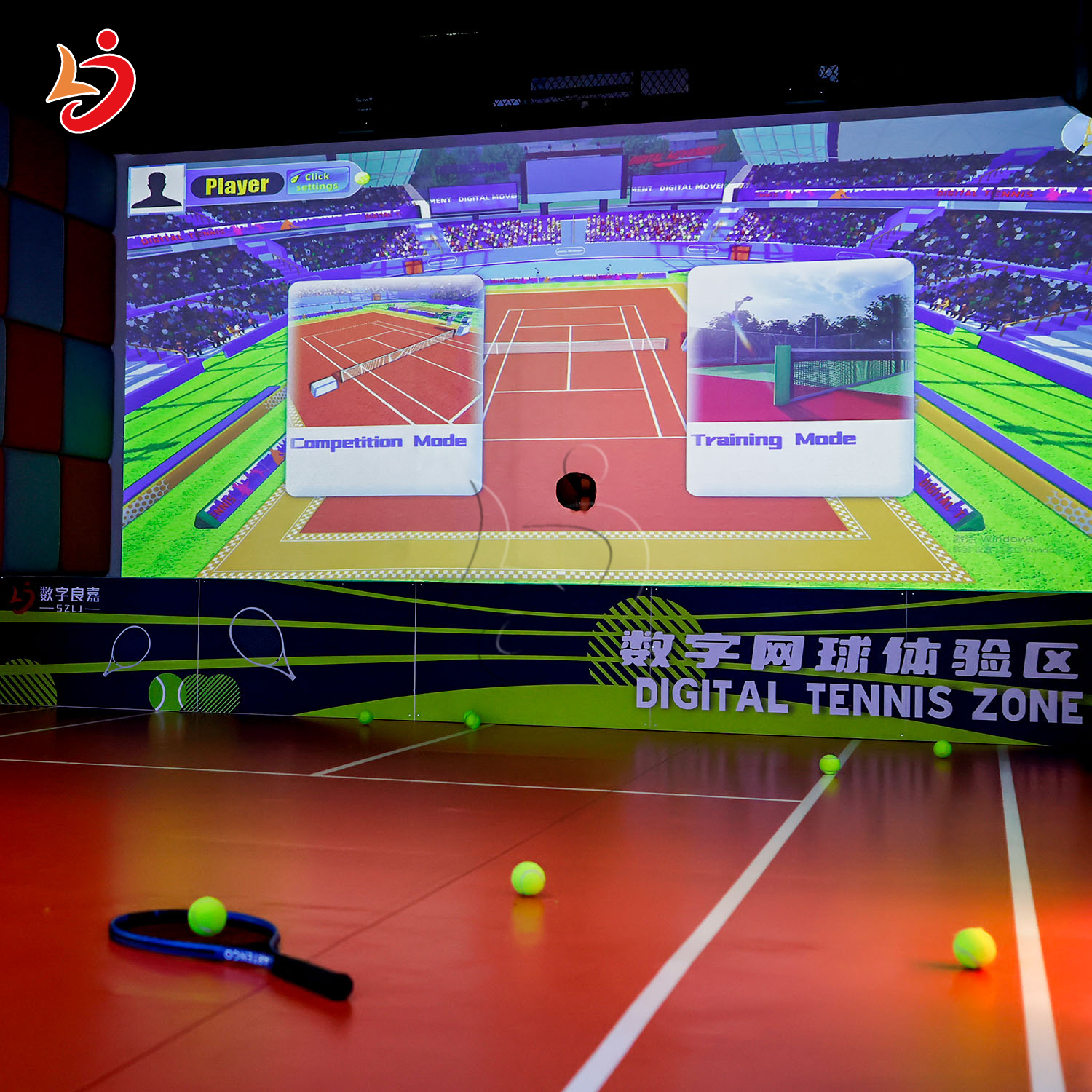
Not every indoor setup demands a massive warehouse footprint. We segment the market solutions into distinct technology categories. This helps you match your room to the right hardware.
These premium systems demand the maximum possible spatial footprint. You must provide the full 16 by 36-foot baseline dimensions.
Screen Clearances: You need space for the heavy-duty impact screen installation.
Projector Distances: Projectors require specific overhead throw distances behind the player.
Framework Margins: The structural enclosure framework consumes vital outer floor margins.
Sensor Placement: High-speed cameras require precise mounting angles and structural depth.
These modern alternatives require moderate to minimal room dimensions. They offer accessible entry points for smaller residential homes.
Wingspan Metrics: VR headsets shift the core metric to static wingspan clearance.
Flightless Play: No forward ball flight space is strictly necessary here.
Height Rules: An 8 to 10-foot ceiling remains critical for overhead safety.
Zero Enclosures: You eliminate the need for massive screens or netting frameworks.
Many secondary spatial considerations routinely disrupt initial installation plans. Deep implementation experience reveals several hidden footprint traps. You must plan for these easily forgotten physical elements.
You must protect touchscreen kiosks and CPU housings. Audio equipment also needs a completely safe physical footprint. Place these items outside the direct firing line. Stray balls can easily shatter expensive monitors instantly. Keep them far away from your primary swing path. They require dedicated, protected alcoves near the room entrance.
High-end setups often integrate automated pneumatic ball machines. These require deep physical placement behind the primary impact screen. This deep placement simulates highly realistic ball trajectories and pace. You must allocate extra structural depth just for this hardware. It prevents the machine from encroaching on your active court space. It also keeps the bulky machinery hidden from view.
Never forget your total floor buildup calculations during planning. You usually add acoustic dampening materials to the concrete first. Then you install a rigid wooden subfloor structure. Finally, you lay down thick turf or hardcourt surfaces. Adding just two inches of subfloor alters everything. It can critically destroy a tight ceiling height tolerance instantly. Calculate your vertical clearance only after finalizing the floor materials.
We serve as your skeptical, expert advisors during the planning phase. We want to warn you about incredibly costly spatial oversights. Avoid these common blunders to ensure a smooth installation.
Ignoring Structural Intrusions: You might measure a basement at 11 feet high initially. However, you forget to account for hanging HVAC ducts. Low-hanging plumbing pipes often intrude directly into the swing plane. You must measure from the lowest structural obstacle, not the joists.
Screen Proximity and Rebound Risks: You place the impact screen too close to back walls. This severely degrades safe ball energy absorption. It causes dangerous, high-velocity rebounds straight back at the player. It will also severely damage the drywall behind the screen.
Overlooking Environmental Control: Closed rooms generate significant ambient heat rapidly. Projectors and gaming PCs run incredibly hot during use. Intense physical exertion adds massive body heat to the space. You must allocate physical ceiling space for adequate ventilation systems.
Misjudging Left-Handed Players: You center the setup perfectly for a right-handed player. You forget to leave symmetrical lateral space for left-handed guests. A balanced room setup accommodates players of all orientations safely.
You need actionable evaluation frameworks before making major decisions. We guide you toward commercial readiness without applying high-pressure sales tactics. Follow these physical steps to qualify your environment.
Grab a physical tape measure and painter's tape today. Map out a 3D bounding box in your prospective room. Mark the exact hitting zone boundaries directly on the floor. Swing a racquet slowly inside this taped physical area. Test your full service motion carefully within the marked zone. Do this critical exercise before ever engaging with hardware vendors.
Allocating raw physical space represents just the very first step. Budgeting your available square footage requires much deeper logistical planning. You must account for specialized commercial surface installations. Building a secure enclosure consumes additional room margins and materials. Heavy-duty netting systems require dense physical framing structures. You must plan for the physical footprint of structural padding. Every physical upgrade subtracts usable inches from your playing zone.
We strongly recommend engaging specialized sports enclosure installers early. Avoid basic DIY approaches for these high-velocity sports setups. Professionals spot dangerous structural hazards incredibly quickly. They ensure your expensive hardware fits perfectly within tight margins. They protect you from dangerous spatial miscalculations. They also ensure your impact screens maintain the correct tension safely.
A specialized indoor setup remains an elite training tool. However, it is entirely bound by the strict laws of physics. Room geometry dictates your ultimate success or failure here. You cannot force dynamic human movement into a tiny box.
You must prioritize vertical ceiling height and room depth above all else. If you possess the required 15 by 23 by 10.5-foot footprint, you are ready. You are a highly viable candidate for a premium build.
Draft a precise floor plan of your space today. Note all permanent structural obstacles like pipes and beams clearly. Then, reach out to a certified provider for a comprehensive feasibility review.
A: A standard two-car garage typically measures 20 by 20 feet. The ceiling usually sits around 8 to 9 feet high. This is usually insufficient for a full-immersion indoor setup. The low ceiling heavily restricts natural service motions. The lack of depth completely restricts your baseline return zone.
A: Commercial-grade sports turf remains a highly popular standard choice. Modular hardcourt tiles or specific indoor tennis carpets also perform excellently. Your choice directly affects ball bounce realism. It also impacts the joint stress you experience during aggressive lateral movements.
A: Yes, you absolutely need buffer space here. Depending on screen tension and ball velocity, you require clearance. You typically need 1 to 2 feet of empty space. This gap sits safely between the screen and the physical wall. It allows the fabric to stretch and absorb kinetic energy.
