


Views: 0 Author: Site Editor Publish Time: 2026-09-03 Origin: Site


Are laggy floors hurting your venue revenue?
Broken tiles and slow sensors frustrate active players. Picture a packed family entertainment center on a busy Saturday afternoon. Dozens of energetic teenagers are aggressively stomping on glowing grids. What happens if a tile cracks under pressure? Or what if a sensor lags by even a fraction of a second? The immersion shatters instantly. This inevitably leads to negative reviews, customer refunds, and a measurable drop in repeat income.
In this comprehensive breakdown, we examine this equipment from a frontline engineering perspective. You will discover how precise tile response time and robust load design work together to ensure operational reliability. This is exactly how you keep your attractions profitable day after day without constantly calling a technician.
Response Time is Critical: A response time of under 20-30 milliseconds is essential for a seamless gaming experience. It prevents player frustration caused by system lag.
Dynamic vs. Static Load: Reliable hardware must withstand more than just the static weight of standing players. It must absorb the sudden dynamic impact of multiple adults jumping simultaneously.
Hardware-Software Synergy: True reliability comes from precision sensors that instantly communicate with the central game engine without registering false triggers.
ROI Depends on Durability: Investing in high-load, fast-response tiles reduces maintenance downtime. It ensures your active gaming grid remains a continuous centerpiece for your venue.
When evaluating capital expenditures for arcades or event venues, decision-makers must look beyond surface-level aesthetics. Purchasing an interactive floor game represents a significant Bottom-of-Funnel (BOFU) investment. Buyers at this stage are no longer just browsing flashy concepts. They are actively seeking robust hardware that can deliver a verifiable return on investment (ROI) through high throughput and minimal maintenance.
Looking at current industry trends, the commercial entertainment landscape is undergoing a massive transformation. Recent market data reveals a sharp pivot away from passive, single-player arcade machines toward high-energy, group-based physical attractions. Consumers now demand immersive, social experiences they simply cannot replicate in their living rooms. Consequently, venues upgrading to low-latency, active floor grids are seeing a substantial increase in repeat footfall compared to those relying on legacy projection systems. Hardware reliability is no longer just an operational metric. It has become the primary driver of customer retention in modern indoor amusement equipment.
Understanding the resilience of these systems requires a breakdown of their physical construction. As engineers often point out, a commercial-grade tile is not a single component. It is a highly engineered stack of specialized layers designed to take a beating:
Surface Layer: Usually constructed from anti-slip, scratch-resistant tempered glass or high-density polycarbonate. This layer is designed to protect the internal electronics from heavy impact and abrasive shoe soles.
Sensor Layer: A matrix of capacitive or optical sensors that detect human presence and movement with millimeter precision.
LED Matrix (PCB): The printed circuit board housing the Light Emitting Diodes. This is responsible for delivering bright, high-contrast visual feedback.
Load-Bearing Chassis: The structural foundation. Typically forged from die-cast aluminum or heavy-duty steel, it distributes physical weight away from the fragile PCB.
Among the various software applications available, grid-based, color-stepping formats like the Super Cube game have become massive revenue drivers. These games require players to constantly run, jump, and dodge across specific colored tiles. Because the gameplay is inherently fast-paced and intensely physical, it places maximum mechanical stress on the hardware. Venues deploying this specific game format demand the highest level of structural integrity. Even a single failing tile can disrupt the grid and ruin the competitive integrity of the entire session.
In the realm of digital entertainment, hardware specifications directly dictate the user experience. Among these specifications, sensor latency—commonly referred to as response time—is the absolute most critical metric for any motion sensing game.
Response time is measured in milliseconds (ms). It defines the exact duration it takes for the system to react to a physical input. The journey of a digital signal in an active gaming grid involves several rapid steps. First, a player steps on the tile. Next, the physical sensor detects the change in pressure or capacitance. It then transmits a signal to the localized microcontroller. The main processor calculates the game logic, and finally, the system instructs the LED matrix to change color. For commercial applications, this entire cycle must occur in under 30 milliseconds.
Players notice lag immediately. Human perception is highly sensitive to latency. If a player successfully steps on a "safe" green tile, but the system registers the action 100 milliseconds too late, the game penalizes them incorrectly. This breaks the fundamental trust between the player and the game mechanics. When guests feel a game is rigged or unresponsive, they simply walk away. This leads to poor customer reviews, decreased word-of-mouth referrals, and a direct drop in repeat revenue.
Manufacturers utilize different sensor technologies. Each comes with distinct advantages and latency profiles. Choosing the right technology is vital for commercial viability.
Sensor Technology | Average Latency | Durability in High Traffic | Ideal Commercial Application |
|---|---|---|---|
Mechanical Pressure | 40ms - 80ms | Moderate (Moving parts wear out) | Low-budget or temporary installations. |
Infrared (Optical) | 20ms - 50ms | High (No moving parts) | General interactive displays, subject to ambient light interference. |
Capacitive Touch | < 20ms | Very High (Solid-state design) | Fast-paced, high-intensity gaming environments. |
Capacitive sensors currently offer the fastest and most reliable response times for commercial use. They detect the electromagnetic field of the human body instantly, eliminating the mechanical delay found in older pressure switches.
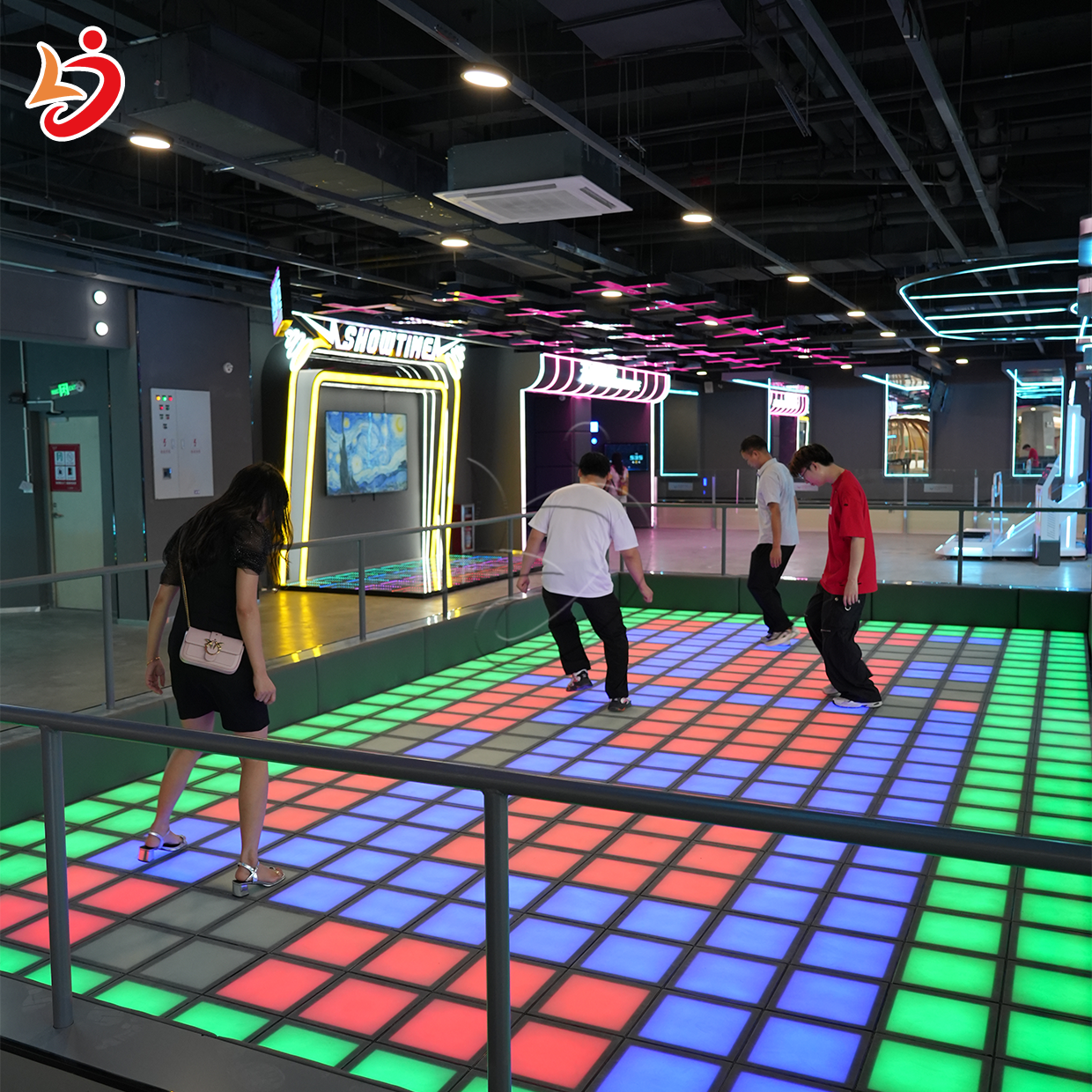
While response time governs the digital experience, structural load design dictates the physical lifespan of the equipment. High foot traffic combined with aggressive gameplay will rapidly destroy poorly engineered LED floor tiles.
When evaluating technical specifications, buyers must distinguish between static and dynamic load capacities. Static load refers to the maximum weight the floor can safely support when objects or people are perfectly still. A standard floor might boast a static load of 500 kg per square meter.
However, dynamic load is the metric that actually matters on the floor. When an 80 kg adult jumps and lands on a tile, the sudden, concentrated kinetic energy creates a dynamic impact force. This force can easily exceed 300 kg of localized pressure. Because active attractions require constant jumping and running, a robust dynamic load capacity is the true test of longevity for any installation.
The choice of surface material directly influences the floor's ability to survive dynamic impacts. The top protective layer must be rigid enough to prevent flexing, yet resilient enough to avoid shattering. High-density polycarbonate offers excellent shatter resistance and slight flexibility. Meanwhile, specially treated anti-slip tempered glass provides superior scratch resistance and visual clarity.
Crucially, the engineering must ensure proper load distribution. When a heavy impact occurs, the surface layer must transfer the kinetic energy directly to the chassis. It must bypass the internal LED diodes and delicate sensor nodes. If the surface flexes too deeply, it will crush the internal components. The end result is dead pixels and broken sensors.
The foundation of any luminous play area is the base chassis. A robust die-cast aluminum or reinforced steel base is strictly necessary to keep the tiles perfectly level. If a chassis warps under heavy use, it creates microscopic gaps and uneven surfaces. Not only does this present a severe trip hazard for running players, but it also leads to uneven wear and tear. This accelerates the degradation of the entire floor matrix.
Decision-makers often look at response time and load capacity as separate specifications. In reality, these two factors are deeply intertwined in a commercial environment. The structural integrity of the floor directly impacts the performance of the electronic sensors beneath the surface. Understanding this synergy is critical for venue managers who want to avoid premature equipment failure.
A false trigger occurs when the game system registers a player's step on a tile that was not actually touched. This is a notorious issue in poorly designed floors where the static load capacity might be adequate, but the dynamic load design is flawed. When a heavy adult jumps onto a low-quality tile, the impact causes the internal chassis to flex. This mechanical bending can compress the sensors in adjacent tiles, tricking the software into registering a "ghost step."
In competitive environments, ghost steps ruin the integrity of the experience. Players become frustrated when they lose points due to hardware malfunctions. Premium commercial floors solve this by isolating the sensor arrays within rigid, independent aluminum or high-grade steel frames. This ensures that the dynamic impact on one tile does not transfer mechanical stress to its neighbors. The response time remains accurate, and the gameplay stays fair.
Electronic components generate a significant amount of thermal energy. This is especially true when operating at high brightness levels for 12 to 16 hours a day. When multiple tiles are packed tightly together and subjected to constant foot traffic, this heat becomes trapped. High temperatures increase the electrical resistance within the sensor pathways. This can severely degrade the response time. A sensor that reacts in 20 milliseconds at room temperature might slow down to 60 milliseconds if the internal components overheat.
Furthermore, effective load design inherently incorporates thermal management. High-end equipment utilizes heat-dissipating chassis materials and strategic ventilation channels. These allow thermal energy to escape without compromising structural integrity. This thermal-mechanical synergy ensures that the sensors continue firing rapidly without thermal throttling.
Sensors require precise physical alignment to function correctly. Over months of heavy use, the constant pounding of dynamic loads can cause inferior materials to warp or compress. When the protective top layer shifts even a few millimeters closer to the sensor layer, it permanently alters the calibration. The system may become hyper-sensitive or entirely unresponsive. By utilizing aerospace-grade polymers and reinforced support pillars, top-tier manufacturers ensure that the distance between the impact surface and the sensor remains mathematically constant. This structural rigidity guarantees that the sensors maintain their factory calibration from day one to day one thousand.
Even with the most robust engineering, hardware subjected to intense physical interaction will eventually require maintenance. For arcade owners and event planners, the cost of maintenance is not just the price of a replacement part. It is the revenue lost while the attraction is shut down. Therefore, prioritizing modularity and environmental protection is absolutely essential.
In a traditional arcade cabinet, a broken screen or faulty motherboard might require a technician to spend hours dismantling the machine. Modern interactive floors utilize a modular, "hot-swappable" design. If a single tile suffers from a dead pixel or a crushed sensor, venue staff can use a specialized magnetic suction tool to lift the damaged tile out of the grid. They can drop a replacement in its place in less than three minutes. For a venue operating on tight margins, this modularity is the difference between a minor five-minute hiccup and a multi-day attraction closure.
These systems are typically installed in high-traffic entertainment centers. Spilled beverages, tracked-in mud, and airborne dust are inevitable. A reliable system must feature a high Ingress Protection (IP) rating.
For commercial applications, an IP65 rating is the strict minimum standard. The "6" indicates total protection against dust ingress, ensuring that fine particles do not interfere with the sensors. The "5" indicates protection against low-pressure water jets from any direction. This means that if a customer spills a large soda directly onto the seams of the floor, the liquid will not short-circuit the internal matrix or the power supply. Venues that ignore IP ratings often face cascading electrical failures within the first few months of operation.
Hardware reliability is vastly improved when paired with intelligent backend software. Commercial-grade systems include diagnostic dashboards that monitor the health of every individual tile in real-time. If a specific tile begins to experience a lagging response time or registers an abnormal load distribution, the software alerts the operator before the component completely fails. This proactive approach allows venue managers to swap out degrading tiles during off-hours.
Selecting the right equipment requires looking past marketing brochures and examining empirical specifications. Below is a comprehensive engineering checklist designed to help decision-makers evaluate true reliability and performance before making a capital investment.
Weight Capacity (Static vs. Dynamic): Do not accept generic "weight limits." Demand to see both static and dynamic load ratings. A commercial-grade floor should support a static load of at least 500 kg per square meter. It must also feature a dynamic impact resistance capable of handling the synchronized jumping of multiple adults.
Response Time (Latency): Request technical documentation proving the sensor latency. For a seamless user experience, the delay between a physical step and the LED color change must be under 30 milliseconds.
Refresh Rate: While response time dictates how the game feels, the refresh rate dictates how it looks—especially on camera. A refresh rate of 3840Hz is highly recommended. A high refresh rate eliminates the "flicker" effect when players record the floor on their smartphones. This is crucial for organic social media marketing.
Surface Material: Ensure the top layer is made of anti-slip, high-density polycarbonate or specialized tempered glass designed to resist scratching from abrasive shoe soles.
A manufacturer's warranty is a direct reflection of their confidence in their own engineering. Look for suppliers who offer comprehensive warranties that specifically cover sensor degradation and LED diode failure under commercial use conditions. Furthermore, verify that the manufacturer provides accessible after-sales support, including remote software troubleshooting and readily available replacement modules.
Investing in high-quality amusement infrastructure requires a larger upfront capital expenditure. However, the return on investment is heavily dependent on operational uptime and user satisfaction.
Budget-friendly floors often utilize inferior load designs and slower sensors to cut manufacturing costs. While the initial price tag may look attractive, hidden costs accumulate rapidly. Frequent tile replacements, increased technician labor, and associated downtime quickly erode profit margins. More importantly, delayed response times and ghost steps lead to negative customer experiences. In the era of online reviews, a reputation for having "broken" or "laggy" equipment will deter repeat visits and group bookings. This directly impacts the venue's bottom line.
Conversely, a highly responsive, commercial-grade floor acts as a reliable revenue engine. Formats that rely on intense physical exertion and rapid color-matching thrive on premium hardware. When the hardware performs flawlessly, it naturally encourages competitive play.
Players are significantly more likely to pay for multiple rounds to beat their high scores if they trust the accuracy of the floor. Moreover, reliable equipment allows venue managers to confidently host structured tournaments, corporate team-building events, and large group bookings without the fear of sudden hardware failure. This high throughput, combined with minimal maintenance downtime, rapidly accelerates the amortization of the equipment.
The success of your interactive LED floor game depends heavily on the hidden engineering beneath the surface.
Fast tile response times and high dynamic weight limits are not just technical jargon. They are the critical structural pillars that define the user experience. Cutting corners on hardware is a major financial risk that venues simply cannot afford. By partnering with proven manufacturers who prioritize commercial-grade load design and ultra-low latency sensors, you protect your capital investment. Invest in durable, modular systems to keep your indoor attractions running smoothly and profitably every single day.
Ready to equip your venue with hardware built for maximum throughput and zero downtime? Discover high-performance, modular systems and find the perfect configuration for your space at LJ Sports Tech today.
For a seamless, lag-free experience, especially in fast-paced competitive formats, the response time should ideally be under 30 milliseconds. Anything slower than this threshold may result in players feeling like the game is unresponsive, which severely diminishes the overall entertainment value and trust in the system.
High-quality commercial tiles are engineered with heavy-duty load capacities. They are typically capable of supporting a static load ranging from 500 kg to over 1,000 kg per square meter. More importantly, their dynamic load design allows them to safely withstand the concentrated, sudden impact of multiple adults jumping simultaneously without damaging the internal sensors.
Yes, provided you purchase commercial-grade equipment. Reputable systems feature a high Ingress Protection rating, usually IP65 or higher. This specific rating means the individual tiles are tightly sealed against fine dust and are highly resistant to liquid spills, protecting the internal electronics from short circuits caused by dropped beverages.
Premium interactive floors utilize a modular, hot-swappable design. This allows venue operators to use a specialized tool to easily pop out the damaged tile and plug in a new replacement module in just a few minutes. This design minimizes operational downtime and does not require shutting down the entire attraction for extended repairs.
Absolutely. The physical hardware is entirely separate from the software engine. Venue owners can easily download, license, or update new game modes through the central control system. This flexibility allows operators to keep the attraction fresh and engaging for repeat visitors without needing to invest in new physical infrastructure.
Power consumption varies based on the size of the grid and the brightness settings. On average, commercial LED floor tiles consume between 150W to 300W per square meter at peak brightness. High-efficiency models incorporate smart power management systems that reduce draw during standby modes, keeping operational electricity costs manageable.
Yes, most commercial-grade systems are designed for surface-mount installation. As long as the existing floor is perfectly level and structurally sound, the modular chassis can be installed directly on top. For uneven surfaces, adjustable leveling feet or a custom sub-frame must be utilized to prevent mechanical stress on the tiles.
