


Views: 0 Author: Site Editor Publish Time: 2026-08-11 Origin: Site


Maximizing throughput and safety in a confined footprint is the primary engineering challenge when designing an indoor shooting facility. Selecting the wrong target retrieval layout results in operational bottlenecks, increased liability from cross-lane interference, and wasted square footage that limits revenue potential. Facility operators must balance strict spatial constraints with the desired volume of shooters to maintain safety and operational flow.
You need a layout that accommodates your specific shooter demographics while optimizing lane utilization. We will transition into an objective evaluation of layout configurations—ranging from static backstops to motorized retrieval and digital projection systems—to determine which architecture best aligns with your facility's operational goals and spatial constraints.
Space dictates system viability: Standard AMO (Archery Manufacturers Organization) guidelines require specific lane widths and safety buffers that dictate whether a static or movable layout is feasible.
Throughput relies on retrieval speed: Motorized target retrieval systems eliminate cold-range downtime, significantly increasing hourly shooter volume compared to static walk-down ranges.
Digital systems drive premium pricing: Integrating a simulated archery system or interactive projection allows facilities to charge premium lane fees while requiring specialized lighting and screen infrastructure.
Safety infrastructure is non-negotiable: Regardless of the retrieval technology, redundant backstops and engineered baffle systems are required to mitigate liability.
Designing a safe and functional facility starts with strict adherence to spatial standards. Baseline AMO and USA Archery spatial requirements mandate a minimum lane width of 30 inches. However, commercial venues typically recommend 36 to 40 inches to ensure comfortable clearance for wide-stance compound shooters. The double-archer dynamic heavily influences these dimensions. When a layout supports two archers shooting simultaneously per lane, you must expand the safety clearance zones to prevent elbow or bow limb interference during the draw cycle. You cannot compromise on these dimensions without risking physical contact between shooters on the line.
Depth requirements dictate the overall footprint. A standard indoor archery range requires an 18-meter (20-yard) distance from the shooting line to the target face. You must verify and mark these distances accurately using permanent floor markers, high-visibility tape measures, and laser rangefinders. Behind the targets, a critical safety buffer of 2 to 3 feet is mandatory. This clearance zone allows backstop curtains to flex and absorb kinetic energy without arrows striking the structural wall behind them. If you mount a backstop flush against drywall or concrete, the arrow will punch through the material and shatter against the hard surface.
To properly map out your floor plan, consider the following spatial allocations for a standard commercial setup:
Shooting line depth: Allocate at least 10 feet behind the firing line for waiting archers, bow racks, and equipment assembly.
Active lane distance: Exactly 60 feet (20 yards) from the line to the front face of the target block.
Target depth: Standard commercial foam blocks measure 18 to 24 inches deep.
Backstop buffer: A minimum of 36 inches from the rear of the target to the hanging ballistic curtain.
Wall clearance: An additional 12 to 18 inches between the hanging curtain and the physical building wall to allow for material deflection upon impact.
Throughput directly impacts your operational efficiency. In static setups, operational downtime spikes during mandatory cease-fire periods. Archers must stop shooting, rack their bows, and walk downrange to manually retrieve arrows. This walk-down time significantly reduces the active shooting minutes per hour. When you run a busy facility, every minute the range is cold represents lost capacity.
You must establish a baseline performance metric based on how many arrows can be shot per hour per lane. Layout choices directly impact this number. A system that requires frequent manual retrieval limits volume, whereas automated systems keep archers on the line longer. Balancing this throughput with strict safety protocols ensures you maximize lane utilization without compromising archer security. You have to calculate the cycle time of a shooter. If an archer shoots a standard end of three arrows, the time taken to walk 20 yards, pull the arrows, and walk back often exceeds the time spent actually shooting.
Consider the operational flow of a standard walk-down range. You need a range officer to call the line clear. You need visual indicators, like red and green strobe lights, to signal range status. You must enforce strict rules about keeping arrows in the quiver until the line is hot. All of these administrative controls take time. Upgrading the physical layout to reduce this friction is the most effective way to increase your daily shooter volume.
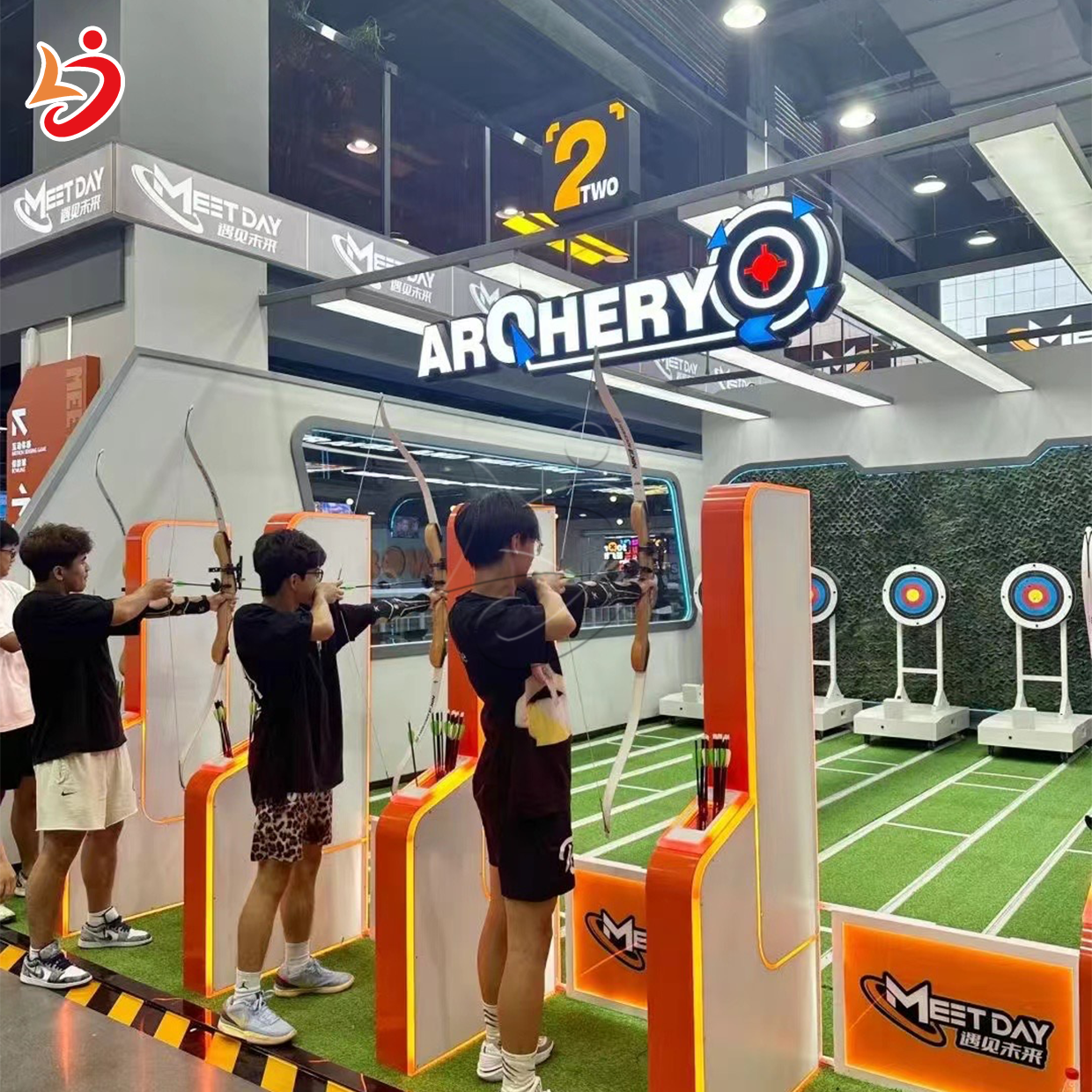
The standard fixed-distance layout relies on high-density foam blocks or compressed-fiber bales. Heavy-duty compression targets offer excellent durability for high-volume facilities. Constructing multi-target arrays involves using heavy wooden or metal modular target stands. You can stack two to four target blocks to create a larger, safer target face that accommodates variable skill levels and prevents off-target damage. When building these stands, use pressure-treated 4x4 lumber or welded tubular steel to handle the immense weight of stacked foam.
Procuring a complete indoor archery range set offers the lowest initial capital expenditure and requires minimal mechanical maintenance. However, this static approach requires complete range shutdowns for arrow retrieval. It also limits your ability to accommodate mixed-distance shooters on the same line simultaneously. If you have a beginner who needs to shoot at 10 yards and an expert shooting at 20 yards, a static range forces you to compromise the firing line or set up staggered target blocks, which creates dangerous cross-fire angles.
To maximize the lifespan of a static setup, you must implement a rigorous rotation schedule. The center of the target takes 80 percent of the impacts. If you do not rotate the blocks, high-poundage bows will start blowing through the center within weeks. Use a modular system where you can unstrap the array, move the center blocks to the outside corners, and bring fresh foam to the middle. This simple operational habit extends the life of your materials significantly.
Motorized systems utilize overhead tracks or floor-mounted carriers to bring the target directly to the shooting line. A movable archery range eliminates cold-range downtime entirely. Archers retrieve their arrows without crossing the firing line, allowing individual lanes to operate independently at different distances. This is a massive operational advantage. One lane can shoot at 10 yards while the adjacent lane shoots at 20 yards, and neither has to wait for the other to retrieve arrows.
This layout is ideal for training facilities focused on maximizing hourly volume. The drawbacks include higher mechanical maintenance overhead and strict structural requirements. You need robust ceiling support for overhead tracks or perfectly leveled floors for ground carriers. Errant arrows also pose a risk of damaging the track mechanisms. If a shooter launches an arrow high and clips the drive cable or the motor housing, you are looking at immediate downtime for that lane.
When installing an overhead track system, you must use unistrut framing bolted directly to the ceiling joists. Drop ceilings cannot support the dynamic load of a moving target carrier. The drive cables must be tensioned correctly to prevent the target from swaying when it stops. A swaying target is unshootable and frustrates users. Floor-mounted systems avoid the ceiling load issue but require a perfectly flat concrete slab. Any dip or rise in the floor will cause the carrier track to bind, burning out the drive motor prematurely.
Integrating a simulated archery system transforms a standard lane into an interactive experience. Archers shoot blunt-tip or standard arrows at a durable, sensor-equipped projection screen. This setup offers high engagement through gamification, allowing for dynamic scenarios like bowhunting simulations and moving targets. The system uses high-speed cameras or infrared sensors to track the arrow's flight path and calculate the exact point of impact on the digital screen.
While this maximizes revenue per square foot, it carries the highest upfront cost. You must implement strict ambient light control to ensure screen visibility. Additionally, the projection screen impact layer requires frequent replacement depending on arrow volume and tip type. You cannot run broadheads on these screens. Even with field points, the constant penetration eventually degrades the screen's structural integrity, leading to light bleed from the projector behind it or failure to register hits.
To successfully deploy a digital system, you need a dedicated dark zone. Standard range lighting will wash out the projector image. You must install directional baffles on your overhead lights to keep the firing line illuminated while keeping the target area dark. The projectors themselves need to be high-lumen, short-throw models mounted securely in protective cages to prevent damage from wild shots. The calibration of the sensor array is a weekly maintenance task. If the cameras get bumped or accumulate dust, the hit detection becomes inaccurate.
System Architecture | Infrastructure Requirements | Throughput Efficiency | Maintenance Burden |
|---|---|---|---|
Static Target Lanes | Basic floor space, standard lighting, heavy-duty stands | Low (Requires mandatory cease-fire periods) | Low (Manual target rotation and replacement) |
Motorized Retrieval | Structural ceiling joists, unistrut framing, dedicated power | High (Continuous independent shooting) | Medium (Cable tensioning, motor servicing) |
Simulated Systems | Ambient light control, sensor calibration, short-throw projectors | Medium to High (Fast-paced gamification) | High (Screen replacement, software updates) |
Commercial clubs demand heavy-duty cycle capabilities. They require easily replaceable foam cores, robust baffles, and systems designed for continuous daily use. A commercial facility might see hundreds of arrows per lane every single day. The materials must withstand relentless kinetic energy. In contrast, a high-end residential basement setup prioritizes space-saving modularity. Residential users prefer compact, high-durability target setups that fit within standard basement joist spans without requiring extensive structural modifications.
For a commercial build, you must engineer the space for the lowest common denominator. Novice shooters will miss the target entirely. You need wall-to-wall backstop curtains and ceiling baffles to catch high-flying arrows. Residential builds usually cater to a single experienced shooter, meaning the target array can be smaller and the peripheral protection less extreme. However, residential setups often struggle with ceiling height. A standard 8-foot basement ceiling makes shooting a long recurve bow difficult, requiring careful positioning of the shooting line to avoid limb strikes against the floor joists.
Purchasing a pre-engineered range package ensures component compatibility and speeds up installation. It eliminates the guesswork of matching tracks, backstops, and lighting. When you buy a complete system, the manufacturer has already calculated the load tolerances and motor torque required to move the specific weight of the target blocks. Conversely, piecing together custom components allows for highly specialized configurations but increases installation complexity. You take on the engineering liability.
Modular target systems generally offer better long-term efficiency compared to fabricating custom wooden target stands in-house. While building your own stands out of lumber seems cheaper initially, the labor hours and the inevitable splintering and failure of the wood under repeated arrow strikes make it a poor long-term choice. Modular steel stands with replaceable foam inserts allow you to swap out damaged sections in minutes rather than rebuilding an entire wooden frame.
An interactive archery projection setup requires a strong business case. You must calculate the premium lane rental rates against ongoing software licensing and hardware maintenance costs. Target demographics—such as corporate events, private parties, and advanced hunters looking for realistic practice—often justify this digital upgrade by driving higher hourly billing rates and repeat visits. People will pay a premium to shoot at moving digital deer or play archery-based party games.
To realize the ROI, you must market the lanes correctly. A standard static lane appeals to traditional target archers. A projection lane appeals to the entertainment sector. You can host leagues based on digital hunting scenarios, which keeps shooters coming back weekly. However, you must factor in the consumable cost of the impact screen. If a screen lasts three months under heavy use, that replacement cost must be built into your hourly rental fee. Track the exact number of hours the system is active and correlate it to screen degradation to find your true operating margin.
High-poundage compound bows and micro-diameter arrows present a severe risk of penetrating standard backstops. Modern compound bows generate massive kinetic energy, and thin carbon arrows slip through standard netting easily. If a backstop fails, arrows will damage the structural walls behind the targets, creating a massive liability. To mitigate this, specify the use of layered Kevlar, specialized ballistic curtains, or high-density rubber matting behind the primary target line.
Ensure the suspension system allows the material to drape and absorb impact rather than remaining rigid. If you pull a backstop curtain tight like a drum, the arrow will pierce it. The curtain must hang loosely, with plenty of folds, so it can travel backward upon impact, dissipating the arrow's energy. Install a heavy steel cable across the width of the room, use heavy-duty carabiners to hang the curtain, and leave at least a foot of material pooling on the floor to prevent arrows from sliding underneath.
You must also protect the side walls. Novice shooters frequently release arrows at severe lateral angles. Install angled plywood baffles covered in carpet or high-density foam along the side walls of the range. These baffles will catch or deflect errant arrows before they strike the drywall, protecting your building infrastructure and preventing dangerous ricochets back toward the firing line.
Illuminating target faces, such as standard 80cm FITA or NASP targets, is challenging. Poor lighting blinds the archer or washes out digital projection screens. If the target is in shadow, shooters cannot see their pins against the bullseye. Implement zoned, dimmable LED track lighting with directional baffles. This ensures clear sightlines, optimal contrast on the target face, and prevents glare from reflecting off arrow shafts or digital screens.
The lighting layout requires specific geometry. Do not place lights directly above the shooting line, as this casts harsh shadows over the archer's face and peep sight. Instead, mount the lights slightly ahead of the shooting line, angled back toward the shooter, and place a secondary bank of high-intensity directional LEDs directly above the target array, angled down at 45 degrees. This washes the target face in bright, even light without spilling into the archer's eyes.
For digital systems, ambient light is the enemy. You must isolate the projection lanes from the rest of the facility using heavy blackout curtains. Paint the walls and ceiling in the projection zone a flat, matte black to absorb stray light. Any reflective surfaces will bounce light back onto the screen, degrading the image quality and confusing the optical tracking sensors.
Rapid target wear leads to dangerous arrow pass-throughs. Facilities often fail to rotate targets adequately. When an arrow passes completely through a worn foam block, it strikes the backstop curtain with full force, accelerating the wear on your secondary containment system. Establish a strict target rotation protocol, swapping high-wear center blocks with less-damaged outer blocks regularly.
Select self-healing, high-density foam targets designed specifically for commercial use to maximize lifespan and maintain safety. Avoid cheap, low-density block targets meant for backyard use; they will not survive a week in a commercial environment. When stacking blocks, use heavy-duty ratchet straps to compress the array tightly together. If there are gaps between the blocks, arrows will find those seams and pass right through. Check the tension on these straps weekly, as the foam will compress and settle over time.
Mechanical and digital systems introduce realistic ongoing costs. You must budget for replacing drive belts on motorized tracks, updating software for simulators, and continuously rotating foam blocks. Develop a preventative maintenance schedule to inspect overhead tracks for arrow damage and calibrate digital sensors to ensure accurate hit detection. Neglecting this maintenance leads to catastrophic system failures during peak business hours.
For motorized tracks, keep the rails clean and lubricated according to the manufacturer's specifications. Dust from carbon arrows and foam targets accumulates quickly, turning into a sticky paste that binds the carrier wheels. Wipe down the tracks weekly. For digital systems, keep the projector lenses clean and ensure the cooling fans are free of dust. Overheating projectors will shut down mid-session, ruining the customer experience.
The optimal target retrieval layout depends entirely on your primary operational model. Static lanes serve budget-conscious clubs effectively, motorized systems dominate high-throughput training centers, and simulated setups excel in entertainment-focused venues. If your space is limited, choose a static modular setup. If maximizing hourly billing and eliminating downtime is the goal, invest in a motorized retrieval system.
Measure your exact usable footprint, including the mandatory 2 to 3-foot backstop clearance zone behind the target array.
Consult with a structural engineer to verify ceiling load capacities before committing to heavy overhead track systems.
Establish a strict weekly maintenance protocol for target rotation, track lubrication, and backstop inspection.
Request a technical layout consultation to map lane widths, baffle placement, and lighting zones accurately.
A: A standard indoor range requires an 18-meter (20-yard) shooting distance. You must also account for the shooting line, bow racks, and backstop clearance. This typically requires a total room length of at least 75 to 80 feet to operate safely and comfortably without crowding the archers.
A: You must maintain a 2 to 3-foot buffer between the back of the target and the structural wall. This clearance zone allows for arrow penetration and gives the hanging backstop curtain enough room to flex backward and absorb the kinetic energy of the arrow.
A: Yes, provided the building meets specific structural requirements. You must verify ceiling height clearances, ensure the roof joists can handle the dynamic load limits for overhead tracks, and install protective baffling around the drive motors to prevent damage from errant arrows.
A: The lifespan depends heavily on arrow volume and tip type. Commercial screens using blunt tips can last several months under heavy daily use, but they require regular patching or complete replacement of the impact layer to maintain accurate sensor readings and image clarity.
A: AMO standards dictate a minimum width of 30 inches per lane. However, for commercial comfort and safety, widths of 36 to 48 inches are highly recommended. This extra space accommodates wide-stance compound bows and allows two shooters to share a lane safely.
A: Stacking 2 to 4 high-density target blocks on a secure stand is standard practice. This configuration creates a robust 3x3 foot or 4x4 foot shooting face, which is large enough to safely catch off-center shots from novice archers and protect the surrounding infrastructure.
