


Views: 0 Author: Site Editor Publish Time: 2026-08-04 Origin: Site


High-fidelity visual graphics and virtual reality headsets cannot compensate for a lack of physical force feedback in ski simulation. Facility operators and professional buyers often over-index on software features when evaluating an interactive skiing machine. This focus frequently results in investments that fail to retain users. The primary culprit is inaccurate physical gameplay mechanics that break immersion and fail to challenge the user physically.
The true differentiator between a novelty arcade unit and a high-performance indoor ski simulator lies entirely in the platform's resistance engineering. Visuals provide the context, but physical resistance provides the reality. This guide deconstructs resistance mechanisms to help buyers evaluate technical specifications, training efficacy, and hardware longevity. We will examine how hardware defines the simulation experience from the ground up.
Resistance Dictates Realism: Active force feedback is required to accurately simulate the gravitational and centrifugal forces of alpine skiing; passive systems limit the ceiling of an interactive ski game.
The Continuous VR Feedback Loop: The highest-performing units utilize a continuous feedback loop where a computer analyzes pressure, position, and ski angle in milliseconds, sending data back to the resistance motors to adjust physical feedback, directly impacting user immersion and reducing VR motion sickness.
Training Transferability: For professional use, the platform must replicate lateral Center of Mass (COM) shifts and edge control; otherwise, the machine risks teaching negative biomechanical habits.
A viable simulator must replicate the specific forces a skier feels on the mountain. Simply moving left to right is insufficient for a realistic experience. True simulation requires replicating the complex interplay of gravity, momentum, and friction. The hardware must physically push back against the user in a precise, timed manner that matches the visual terrain displayed on the screen.
The simulation begins before the first turn. The platform must handle the initial forceful push-off. Alpine skiers accelerate out of the gate using explosive quad and glute power. The hardware must translate this physical exertion into virtual acceleration. Before simulated gravity takes over on the digital slope, the machine must read the user's forward weight shift. The sensors detect this aggressive posture. The software then accelerates the visual feed while the physical platform maintains a stable, forward-leaning resistance profile. If the platform feels loose or unresponsive during this phase, the illusion of speed is immediately broken, and the user loses the physical connection to the digital environment.
To achieve this, high-end platforms utilize locking mechanisms or high-torque holds. When the user is in the starting gate, the motors hold the platform rigid. As the user pushes forward, load cells measure the exact force applied. This force data dictates the initial velocity in the software. The transition from a static hold to dynamic lateral movement must be seamless, requiring motor controllers capable of switching modes in milliseconds.
Carving a turn at high speed generates massive centrifugal force. On a real mountain, a skier's legs absorb this pressure. The platform resistance must push back against the user's legs during a virtual turn. This mimics the intense G-forces generated by carving. As the visual turning radius tightens on the screen, the physical resistance must increase proportionally. The motors must drive the platform against the user's downward push. This forces the skier to engage their core and lower body exactly as they would on a steep alpine descent.
Without this active pushback, the user simply slides laterally without engaging the correct muscle groups. In a proper setup, the linear actuators or servo motors generate hundreds of pounds of resistance. When a user initiates a giant slalom turn at a simulated 60 miles per hour, the platform must resist their lateral movement heavily, forcing them to drive their knees forward and angulate their hips. The machine essentially fights the user, requiring genuine athletic exertion to complete the virtual turn.
Effective skiing relies on precise edge control. Skiers use resistance to control their descent. They bring their skis sideways to the slope. They angle them so that gravity causes no unwanted acceleration or deceleration. A simulator must physically lock or resist lateral movement to simulate this precise edge engagement. When the user tilts their boots to engage the virtual edge, the platform must stiffen. It must hold that lateral position against the user's body weight.
This simulates the skis biting into hard-packed snow. If the platform yields too easily, it mimics sliding on ice rather than carving a controlled turn. Advanced platforms use independent left and right edge sensors. If a user applies 70% of their weight to the downhill ski and 30% to the uphill ski, the platform adjusts its tilt and resistance to match that specific weight distribution. This level of mechanical fidelity separates professional training tools from basic amusement rides.
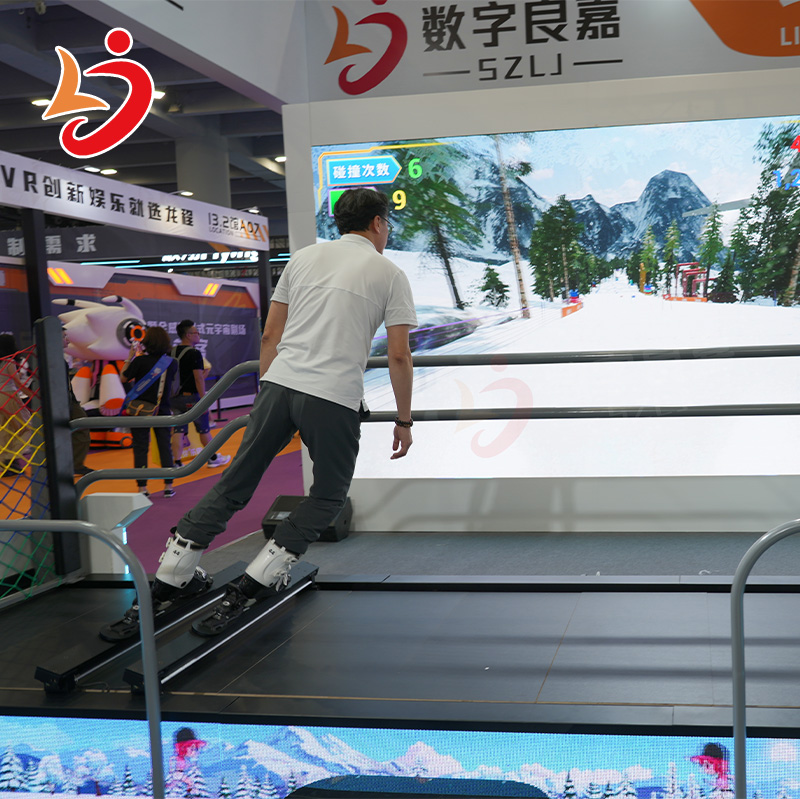
The bridge between physical exertion and digital gameplay relies entirely on hardware responsiveness. The machine must read the user's intent instantly. It must then translate that intent into on-screen action and physical feedback. This requires a sophisticated network of sensors and high-speed data processing.
Hardware reads the user's physical inputs through an array of sensors. Load cells and optical sensors are mandatory for high-end simulation. These sensors track the exact angle of the skis. They measure the precise pressure applied to the inside and outside edges. This data feeds directly into the visual engine of the interactive ski game. The polling rate must operate in milliseconds.
When a user shifts their weight from the heel to the toe, the load cells detect the micro-adjustment. The software then alters the virtual trajectory. Simultaneously, the resistance motors adjust the platform's pitch to match the new virtual terrain. A standard high-performance setup includes:
Strain gauges mounted under the binding plates to measure downward force.
Rotary encoders on the main pivot shaft to track the exact degree of lateral travel.
Inclinometers to measure the forward and backward pitch of the user's boots.
High-speed microcontrollers that package this sensor data and send it to the game engine at 1000Hz.
There is a complex synchronization between the physical resistance applied by the platform and the on-screen turning radius. Optimizing the interplay between turning radius, skiing speed, and lateral Center of Mass (COM) distance reduces virtual skiing time and maintains deep immersion. If the user initiates a tight slalom turn, the platform must snap quickly to the side. The resistance must peak at the apex of the turn.
The visual speed must reflect the friction of the aggressive edge angle. If the platform moves too slowly while the screen shows a rapid turn, the sensory disconnect ruins the experience. The software must calculate the theoretical friction of the snow surface. A sharp turn on virtual ice requires the platform to move rapidly with high resistance, while a wide turn in virtual powder requires slower platform movement with a dampened, heavy resistance profile.
Resistance systems must handle in-game errors and aerial maneuvers realistically. The hardware must simulate take-off forces for jumps. As the user hits a virtual ramp, the platform resistance should momentarily drop to simulate weightlessness. Upon landing, the motors must engage instantly to simulate impact. A sudden drop in resistance or a forced mechanical deceleration physically communicates point deductions.
For example, crashing on a landing might deduct 25% to 50% of the jump's points. The machine communicates this failure by locking the platform or forcing a sluggish lateral response, mimicking a loss of momentum in deep snow. If a user catches an edge in the game, the platform can execute a rapid, jarring vibration through the servo motors, instantly alerting the user to the mistake without requiring them to look at a score counter.
Not all simulators use the same mechanical principles. Understanding the underlying technology helps match the hardware to the intended use case. The market generally divides into three distinct categories of resistance engineering.
Passive systems represent the entry level of simulation hardware. They rely entirely on physical tension and lack digital integration with the resistance mechanism.
These platforms use heavy-duty springs or elastic bungee cords. The physical tension increases linearly the further the user moves from the center of the platform. The primary advantages are simplified maintenance and fewer electronic components. There are no complex motors to burn out. However, passive systems fail to replicate the dynamic, variable resistance of actual snow. The resistance is always predictable and linear. These systems cannot simulate the difference between ice and powder. They are best suited for high-throughput, casual arcade environments where technical accuracy is not the priority.
Active systems are the standard for professional training and high-end commercial installations. They provide dynamic, intelligent resistance controlled by the software.
These units use direct-drive electromagnetic motors. The motors dynamically alter platform resistance based on the virtual terrain and the user's speed. The software dictates the physical pushback in real-time. Active feedback delivers exceptional fidelity. It is absolutely required for a true virtual skiing machine aimed at enthusiasts or athletes. The motors can simulate the chatter of hard ice or the drag of deep powder. These systems require specialized maintenance, including regular calibration of the motor controllers and inspection of the drive belts.
Advanced platforms go beyond simple left-to-right resistance. They incorporate complex spatial tracking and multi-axis movement to challenge the user's balance.
These platforms physically tilt, drop, or heave. They force the user to constantly adjust their Center of Mass. This replicates the precise trajectory optimization required in professional alpine racing. The user cannot simply lean; they must actively manage their balance over the moving skis. Advanced COM tracking can be calibrated for specialized use cases. For example, the telemetry can be adjusted for sit-ski alpine skiing trajectories. This expands the commercial and therapeutic applications of the hardware, allowing adaptive athletes to train with the same high-fidelity force feedback as standing skiers.
Hardware Resistance Comparison
System Type | Primary Mechanism | Simulation Fidelity | Best Use Case |
|---|---|---|---|
Passive Mechanical | Springs and Bungees | Low (Linear tension only) | Casual Arcades, Family Entertainment |
Active Motorized | Electromagnetic Motors | High (Dynamic, terrain-responsive) | Commercial Venues, Enthusiast Training |
COM Tracking | Multi-axis Motorized Tilt | Ultra-High (Full biomechanical replication) | Professional Athletics, Adaptive Therapy |
Selecting the right hardware requires aligning technical specifications with specific operational goals. Buyers must evaluate how the resistance system impacts long-term usage and data collection.
A clear framework is needed for matching resistance types to business goals. The hardware requirements for a commercial family entertainment center differ vastly from a dedicated ski training game used by off-season athletes. Entertainment venues prioritize throughput and ease of use. A passive or lightly motorized system suffices, as the goal is quick, accessible fun.
Training facilities require uncompromising biomechanical accuracy. Athletes need active electromagnetic resistance to build correct muscle memory. If a training simulator uses passive springs, the athlete learns to fight the spring rather than manage centrifugal force, leading to negative training transfer on real snow. The machine must force the athlete to use their edges correctly, punishing flat skis with a loss of virtual speed and a corresponding drop in physical platform resistance.
High-end resistance platforms serve as advanced diagnostic tools. They link video and GPS or telemetry data to analyze specific alpine disciplines. Coaches can evaluate performance in slalom, giant slalom, Super-G, and downhill events. The hardware records exactly how much pressure the athlete applied to the edges at every millisecond of the virtual run.
This data is overlaid onto the virtual course map. Coaches and users can see exactly where time was gained or lost during a run. They can pinpoint whether a loss of speed was due to late edge engagement or poor COM management. This level of granular analysis is only possible with active motorized platforms equipped with high-resolution load cells. The software generates force-curve graphs, allowing technicians to compare a user's left-turn power output against their right-turn power output, identifying muscular imbalances.
Commercial operation subjects hardware to extreme stress. Assess the wear-and-tear implications of active versus passive resistance systems under heavy use. Passive systems require frequent spring replacements as the metal fatigues over time. Active electromagnetic systems require robust engineering to survive constant directional changes.
Sealed bearings protect against dust and sweat. Industrial-grade motors are mandatory. Consumer-grade motors will quickly overheat and fail when subjected to the continuous torque demands of simulating alpine G-forces for eight hours a day. Facility operators must implement strict maintenance schedules to ensure longevity.
Daily inspection of the main drive belts for fraying or tension loss.
Weekly calibration of the load cells to ensure the zero-point remains accurate.
Monthly greasing of the linear guide rails using manufacturer-specified synthetic lubricants.
Quarterly software diagnostics to check for motor controller faults or sensor communication errors.
Deploying advanced simulation hardware involves specific technical and logistical challenges. Proactive mitigation ensures a safe and effective user experience.
The primary risk of interactive simulators is sensory conflict. This occurs when the visual VR speed does not match the physical platform resistance. The human vestibular system is highly sensitive to these discrepancies. If the user initiates a turn and the VR headset shows immediate movement, but the platform resistance lags by 100 milliseconds, the user will experience motion sickness.
Technical thresholds for acceptable input lag are strict. The sensor-to-resistance response time must remain below 20 milliseconds. Ensuring the computer hardware and motor controllers operate on a continuous, high-speed feedback loop mitigates this risk entirely. Operators must use dedicated, high-performance rendering PCs and avoid running background applications that could interrupt the USB polling rate of the sensor array.
Simulating alpine forces presents inherent physical risks. Adjustable resistance profiles are a strict necessity. A machine must be able to scale down its force feedback for beginners. If a novice experiences the full simulated G-force of a downhill race, they risk joint strain or falls. The software must allow operators to cap the motor torque.
Conversely, the system must scale up for advanced users who require aggressive resistance to execute proper carving techniques. Physical emergency stop buttons and sturdy safety handrails must be integrated into the platform design. Operators should mandate a warm-up run on a low-resistance setting before allowing users to access the high-torque racing profiles.
Installing high-resistance electromagnetic platforms involves strict logistical realities. These machines have a significant physical footprint. Operators must account for the lateral travel distance of the platform during aggressive turns. The machine needs clearance on all sides to prevent injury to bystanders.
Ceiling height is another factor. Simulating jump mechanics requires vertical clearance, especially if the platform features physical heave or tilt functions. Industrial-grade electromagnetic motors draw substantial current. Dedicated 220V electrical circuits are often required to prevent power fluctuations during peak torque demands. Running these machines on standard 110V wall outlets often results in tripped breakers when the motors attempt to simulate heavy G-forces.
The quality of an interactive skiing machine is fundamentally capped by its physical resistance system and sensor feedback loop. Screen resolution and VR headset models are secondary to the biomechanical accuracy provided by the platform. Without realistic force feedback, the simulation fails to deliver either effective training or sustained entertainment value.
Buyers must prioritize active electromagnetic resistance for training and high-end simulation environments. Passive mechanical systems should be strictly reserved for casual, high-throughput arcade settings where technical accuracy is not a primary concern. The hardware must match the operational intent.
Request a physical demo to test the platform's edge control and lateral resistance under heavy physical load.
Ask manufacturers for documented latency specifications, specifically the sensor-to-resistance response time.
Review the warranty terms on the direct-drive motors and load cells to ensure coverage for commercial wear and tear.
Verify the power requirements and spatial footprint with your facility management team before finalizing procurement.
A: Platform resistance provides active force feedback, pushing back against the user's legs during turns. This replicates the centrifugal forces of real skiing. It allows for realistic edge control and neutralizes virtual gravity, forcing the user to engage their core and lower body. This physical exertion deepens VR immersion and makes the gameplay physically authentic.
A: Yes, provided the machine uses active motorized resistance. Accurate lateral Center of Mass tracking and dynamic force feedback force the skier to use correct biomechanics. This positive training transfer is highly effective for practicing edge engagement and turn timing in disciplines like slalom and downhill during the off-season.
A: Passive resistance uses springs or bungees, providing predictable, linear tension that increases as you move outward. Active resistance uses electromagnetic motors that dynamically alter force feedback based on virtual terrain, speed, and edge angle, delivering a highly realistic and variable simulation of actual snow conditions.
A: Active resistance systems alter motor torque in real-time. To simulate ice, the motors provide sharp, immediate resistance, forcing quick edge engagement. To simulate powder, the software decreases the immediate lateral resistance, creating a heavier, more sluggish physical response that mimics dragging through deep snow.
A: Motion sickness is caused by latency between the visual software rendering and the physical resistance response of the platform. If the eyes see a turn before the body feels the resistance, sensory conflict occurs. Preventing this requires high-speed sensors and motor controllers with sub-20-millisecond response times.
A: Hardware simulates jumps by momentarily dropping platform resistance to mimic weightlessness upon take-off. For landings and crashes, the motors engage instantly to create a physical jolt or force a rapid mechanical deceleration. This physical feedback communicates poor landings and is usually accompanied by in-game score deductions.
A: Yes. Commercial units require routine upkeep. This includes calibrating load sensors to ensure accurate weight distribution tracking, inspecting and tensioning drive belts, and checking the electromagnetic motors for heat wear. Sealed bearings must also be kept clean of dust and sweat to maintain smooth lateral movement.
